Address
304 North Cardinal St.
Dorchester Center, MA 02124
Work Hours
Monday to Friday: 7AM - 7PM
Weekend: 10AM - 5PM
Address
304 North Cardinal St.
Dorchester Center, MA 02124
Work Hours
Monday to Friday: 7AM - 7PM
Weekend: 10AM - 5PM


Riding an automatic motorcycle gives you a great sense of freedom on the open road. To keep your bike running perfectly, you must stay focused on regular motorcycle maintenance. Simple care today prevents many mechanical headaches tomorrow.
One of the most important tasks for any rider is the automatic motorcycle oil change. Fresh oil acts like lifeblood for your engine by reducing heat and friction. Without clean lubricant, your engine parts will wear down much faster than they should.
Sticking to a proper oil change schedule is the best way to ensure your bike lasts for years. When you refresh the oil on time, you protect your engine and improve your fuel efficiency. Let’s look at how this routine care keeps your ride smooth and safe.
Understanding the intricacies of automatic motorcycles is crucial for their upkeep, especially when it comes to engine oil and its functions.
Automatic motorcycles have revolutionized the way people commute, offering ease of use and convenience. However, their maintenance requires a specific understanding, particularly regarding their engine oil and transmission systems.
Automatic motorcycles are distinct from their manual counterparts primarily due to their transmission system. They use a Continuously Variable Transmission (CVT) that automatically adjusts the gear ratio to suit the riding conditions. This system is lubricated and cooled by the engine oil, making it a critical component for the motorcycle’s operation.
The CVT system in automatic motorcycles is designed to provide a smooth riding experience without the need for manual gear shifting. This is achieved through a system of belts, pulleys, and weights that adjust the gear ratio based on the engine speed and load. The engine oil plays a vital role in this process by lubricating the moving parts and preventing overheating.
Engine oil is the lifeblood of any motorcycle, and in automatics, it serves multiple critical functions. It lubricates the engine components, reduces friction, and helps in cooling the engine. Moreover, it cleans the engine by carrying away dirt and debris.
“Engine oil is crucial for the longevity and performance of your motorcycle. Regular checks and changes are essential to maintain its health.”
| Function | Description |
|---|---|
| Lubrication | Reduces friction between moving parts |
| Cooling | Helps in dissipating heat from the engine |
| Cleaning | Carries away dirt and debris from engine components |
The CVT transmission system in automatic motorcycles relies heavily on the engine oil for its operation. The oil lubricates the belts and pulleys, reducing wear and tear, and helps in maintaining the system’s efficiency.
Regular maintenance of the engine oil is crucial to prevent damage to the CVT system. Using the right type of oil and changing it at the recommended intervals can significantly extend the life of your motorcycle’s transmission.
Determining the ideal oil change schedule for your automatic motorcycle is crucial for maintaining its performance and longevity. The frequency of oil changes depends on various factors, including the motorcycle’s brand, model, usage, and environmental conditions.
Different motorcycle manufacturers provide specific recommendations for oil change intervals based on their brand and model. For instance, Honda recommends changing the oil every 4,000 to 6,000 kilometers, while Yamaha suggests doing so every 3,000 to 5,000 kilometers. It’s essential to consult your motorcycle’s owner’s manual for the manufacturer’s suggested schedule.
The first oil change for new motorcycles is typically recommended after the initial break-in period, usually around 500 to 1,000 kilometers. This initial oil change is crucial as it helps remove any debris or contaminants that may have accumulated during the manufacturing process and initial usage.
For motorcycles used regularly under normal conditions, a standard maintenance schedule can be followed. This typically involves changing the oil every 2,000 to 5,000 kilometers or every 1 to 3 months, depending on the motorcycle’s usage. Regular oil changes help maintain the engine’s health and ensure optimal performance.
There are two primary approaches to scheduling oil changes: mileage-based and time-based. A mileage-based schedule involves changing the oil after a certain number of kilometers traveled, while a time-based schedule involves changing it at regular time intervals, regardless of the distance traveled. The best approach depends on your riding habits and conditions. For frequent riders, a mileage-based schedule may be more appropriate, while occasional riders may benefit from a time-based schedule.
By understanding and following the proper oil change schedule, you can significantly extend the life of your automatic motorcycle and maintain its performance. Always refer to your owner’s manual and consider your riding conditions when determining the best oil change interval for your bike.
To keep your motorcycle running smoothly, it’s essential to consider the factors that impact your oil change schedule. The oil change interval is not a one-size-fits-all recommendation; it varies based on several critical factors.
The conditions under which you ride your motorcycle significantly affect the oil change interval. Riding in harsh environments, such as dusty or polluted areas, can degrade the oil faster. Similarly, frequent stop-and-go traffic or riding in hilly or mountainous terrain can also impact oil quality.
The type of riding you do most often influences how frequently you should change your oil. Daily commute riding, typically involving short distances and frequent stops, can be more stressful on the engine and oil than long-distance riding.
Daily commute: More frequent oil changes may be necessary due to the increased stress on the engine.
Long distance riding: Less frequent oil changes might be acceptable if you mostly ride long distances at steady speeds.
Climate and temperature extremes can significantly affect the life of your motorcycle’s oil. Riding in very hot or very cold conditions can degrade oil faster.
For instance, high temperatures can cause oil to thin out and lose its lubricating properties, while low temperatures can cause it to thicken and reduce engine performance.
The type and quality of oil used in your motorcycle also play a crucial role in determining the oil change interval. High-quality synthetic oils, for example, can last longer than conventional mineral oils.
“Using the right type of oil for your motorcycle can significantly impact its performance and longevity.”
It’s essential to consult your owner’s manual or speak with a mechanic to determine the best oil for your specific motorcycle model.
Recognizing when your motorcycle needs an oil change is crucial for maintaining its performance and longevity. Regular oil changes are vital for the health of your motorcycle’s engine, as they help to lubricate moving parts, prevent corrosion, and remove contaminants.
One of the simplest ways to determine if your motorcycle oil needs changing is by checking its condition visually. Fresh oil is typically light brown or amber, while degraded oil tends to darken and become more opaque. You can check the oil’s condition by using the dipstick or oil window on your motorcycle. If the oil appears dark or dirty, it’s likely time for a change.
Additionally, inspect the oil for any signs of contamination, such as water or debris. If you notice any unusual particles or a milky appearance, it may indicate a problem with your engine that needs to be addressed.
A decrease in engine performance can be a significant indicator that your motorcycle oil needs changing. If you notice that your bike is not accelerating as smoothly as it once did, or if it’s producing less power, it could be a sign that the oil is degraded and no longer providing adequate lubrication.
Listen for any changes in engine noise. An increase in engine noise, such as clunking or grinding sounds, can indicate that the oil is no longer effectively reducing friction between moving parts.
Strange noises and unusual vibrations while riding can also signal that your motorcycle oil needs attention. If your bike starts to vibrate more than usual or produces unusual noises, it may be due to inadequate lubrication caused by degraded oil.
Pay particular attention to any grinding or clunking noises coming from the engine or transmission area, as these can be indicative of serious wear and tear due to poor lubrication.
Many modern motorcycles are equipped with advanced warning systems that can alert you to potential issues, including the need for an oil change. If your bike’s dashboard lights up with an oil change warning or if you have a digital display indicating low oil level or quality, it’s essential to take action promptly.
These warning systems are designed to help you stay on top of maintenance tasks and prevent more severe problems from developing. Always consult your owner’s manual to understand what the various warning lights on your motorcycle indicate.
When it comes to maintaining your automatic transmission motorcycle, selecting the right type of oil is crucial for optimal performance and longevity. The oil used in your motorcycle serves multiple purposes, including lubricating the engine, protecting against corrosion, and helping to regulate temperature.
There are three primary types of motorcycle oil: mineral, semi-synthetic, and fully synthetic. Mineral oil is derived from petroleum and is the most traditional type. It’s generally less expensive than synthetic options but may not provide the same level of performance and protection.
Semi-synthetic oil blends mineral oil with synthetic oil, offering a balance between price and performance. It provides better lubrication and wear protection than mineral oil alone.
Fully synthetic oil is manufactured to have a uniform molecular structure, providing superior lubrication, fuel efficiency, and wear protection. It’s more expensive but offers the best performance, especially in extreme temperatures.
Viscosity refers to the oil’s thickness and flowability. The SAE (Society of Automotive Engineers) viscosity rating is a measure of the oil’s viscosity at different temperatures. Common viscosity ratings for motorcycle oil include SAE 10W-30, 10W-40, and 20W-50. The first number (followed by “W”) indicates the oil’s viscosity in cold temperatures, while the second number indicates its viscosity at high temperatures.
The API (American Petroleum Institute) service classification is a standard that indicates the oil’s performance level. For motorcycles, the most relevant classifications are API SG, SH, SJ, SL, SM, SN, and SP. These classifications ensure the oil meets certain standards for engine protection and performance.
To choose the right oil for your motorcycle, consult your owner’s manual or manufacturer’s recommendations. Consider factors such as the type of engine, transmission, and riding conditions. Using the wrong type of oil can lead to decreased performance and potentially damage your motorcycle.
By understanding the different types of motorcycle oil, viscosity ratings, and API service classifications, you can make an informed decision and keep your automatic transmission motorcycle running smoothly.
To ensure your motorcycle runs smoothly, it’s essential to know how to check its oil level properly. Regular oil level checks are crucial for maintaining your motorcycle’s health and preventing potential damage.
The first step in checking your motorcycle’s oil level is to locate the oil window or dipstick. The location of this can vary depending on the motorcycle model. Typically, you can find it on the engine or near the transmission. Consult your motorcycle’s manual if you’re unsure.
For most automatic motorcycles, the oil level can be checked using either an oil window or a dipstick. The oil window provides a visual check, allowing you to see the oil level directly. On the other hand, a dipstick requires you to pull it out and check the level on the stick.
To check the oil level accurately, follow these steps:
For motorcycles with an oil window, look for the minimum and maximum marks. The oil level should be between these two marks. For those with a dipstick, pull it out, wipe it clean, insert it back, and then pull it out again to get an accurate reading.
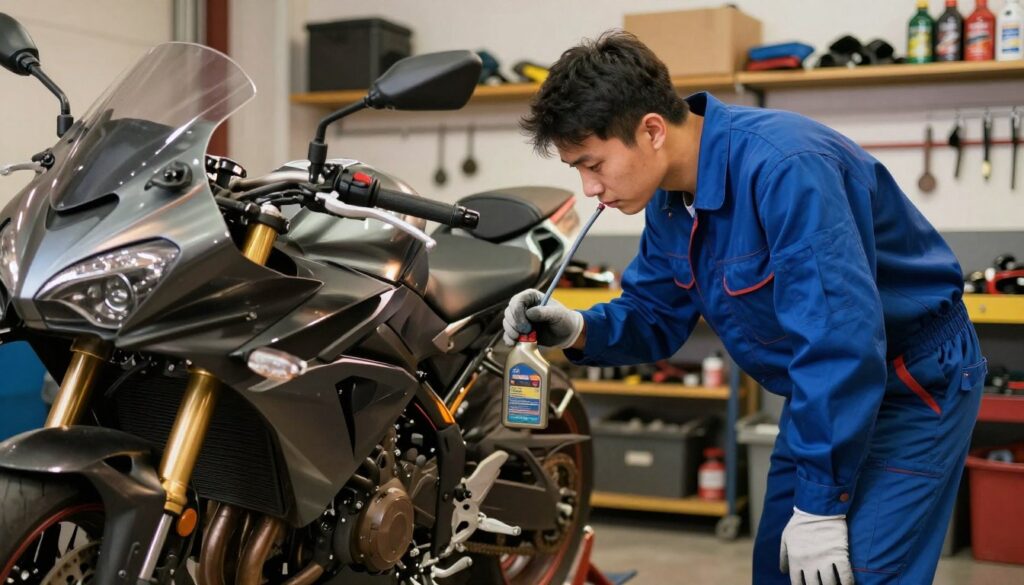
Checking the oil condition is as important as checking its level. The color and consistency can indicate the health of your motorcycle’s engine.
Fresh oil is usually light brown or amber. If the oil is dark or black, it may be dirty and in need of changing. Also, check the consistency; if it’s too thick or gritty, it could be a sign of contamination or degradation.
It’s essential to understand when to add oil and when to change it completely. If the level is below the minimum mark, you need to add oil. However, if the oil is dirty or has been used for a long time, it’s time for an oil change.
Always refer to your motorcycle’s manual for the recommended type of oil to use and the maintenance schedule. Regular checks and maintenance can significantly extend the life of your motorcycle.
Changing your motorcycle’s oil is a crucial maintenance task that ensures the longevity and performance of your vehicle. Regular oil changes help in maintaining the engine’s health by lubricating its components, reducing friction, and preventing overheating.
Before you start, make sure you have the following:
To prepare your motorcycle for an oil change, ensure it’s on a level surface and apply the center stand or use a paddock stand to elevate it. This makes the oil drain process safer and more efficient.
Drain the old oil by removing the drain plug, usually located at the bottom of the engine. Be prepared for the oil to flow out quickly, and have an oil drain pan in place to catch it.
Key steps to follow:
Removing and replacing the oil filter is a critical step. Use a filter wrench to loosen and remove the old filter. Install a new filter by hand tightening it in a clockwise direction.
Refer to your motorcycle’s manual for the correct type and amount of oil to use. Use a funnel to pour in the new oil, and then replace the oil filler cap.
After completing the oil change, start the engine and let it run for a few minutes. Check for leaks around the drain plug and oil filter. Dispose of the used oil and filter responsibly.
Final checks include:
The process of changing your motorcycle’s oil seems straightforward, but several pitfalls can catch inexperienced owners off guard. Avoiding these common mistakes is crucial for maintaining your motorcycle’s performance and extending its lifespan.
One of the most critical errors during an oil change is incorrectly filling the oil level. Overfilling can lead to excessive pressure within the engine, potentially causing leaks or damage to seals. On the other hand, underfilling leaves your engine components without sufficient lubrication, leading to increased wear and potential overheating. Always refer to your motorcycle’s manual for the correct oil level.
Using the incorrect type or viscosity of oil can significantly impact your motorcycle’s performance. Motorcycle oils come in various viscosities and formulations, and using the wrong one can lead to decreased fuel efficiency, increased emissions, or even engine damage. Always check your owner’s manual or consult with a professional to determine the correct oil for your bike.
“The right oil can make all the difference in your motorcycle’s performance and longevity. It’s not just about filling the engine; it’s about choosing the right formula for your specific bike model and riding conditions.”
The oil filter plays a crucial role in keeping your engine clean by filtering out contaminants from the oil. Failing to replace the oil filter during an oil change can lead to the circulation of dirty oil, potentially clogging engine passages and causing premature wear. Make sure to replace the oil filter with a new one that matches your motorcycle’s specifications.
Regular oil changes are vital for the health of your motorcycle’s engine. Skipping these intervals can lead to the degradation of engine components, reduced performance, and potentially catastrophic engine failure. Adhere to the recommended maintenance schedule provided by the manufacturer to ensure your motorcycle runs smoothly.
Finally, it’s essential to dispose of used oil and filters responsibly. Improper disposal can harm the environment, contaminating soil and water sources. Take your used oil and filters to a recycling center or an auto parts store that accepts used oil for recycling.
By avoiding these common oil change mistakes, you can significantly extend the life of your motorcycle’s engine and ensure it continues to perform at its best.
Oil change costs for automatic motorcycles are a critical consideration for riders looking to maintain their vehicle’s performance and longevity. The decision to opt for a DIY oil change or to have it done professionally can significantly impact your maintenance expenses.
The cost of an oil change for an automatic motorcycle can vary widely across different regions in the United States. On average, the cost can range from $30 to $100, depending on factors such as location, type of oil used, and labor costs if you choose professional service.
| Region | Average DIY Cost | Average Professional Service Cost |
|---|---|---|
| Northeast | $40 | $75 |
| South | $35 | $65 |
| West Coast | $45 | $85 |
| Midwest | $30 | $60 |
Choosing to do an oil change yourself can offer significant savings. By purchasing the oil and filter yourself and performing the change, you can save on labor costs, which can be a substantial portion of the total cost. DIY oil changes also give you control over the quality of the oil and filter used.
However, it’s crucial to ensure you’re using the correct type of oil and following the manufacturer’s guidelines for the oil change interval.
While DIY oil changes can be cost-effective, there are situations where opting for professional service is advisable. If you’re not comfortable with performing the oil change yourself or if your motorcycle requires specialized tools or knowledge, it’s best to have it done professionally.
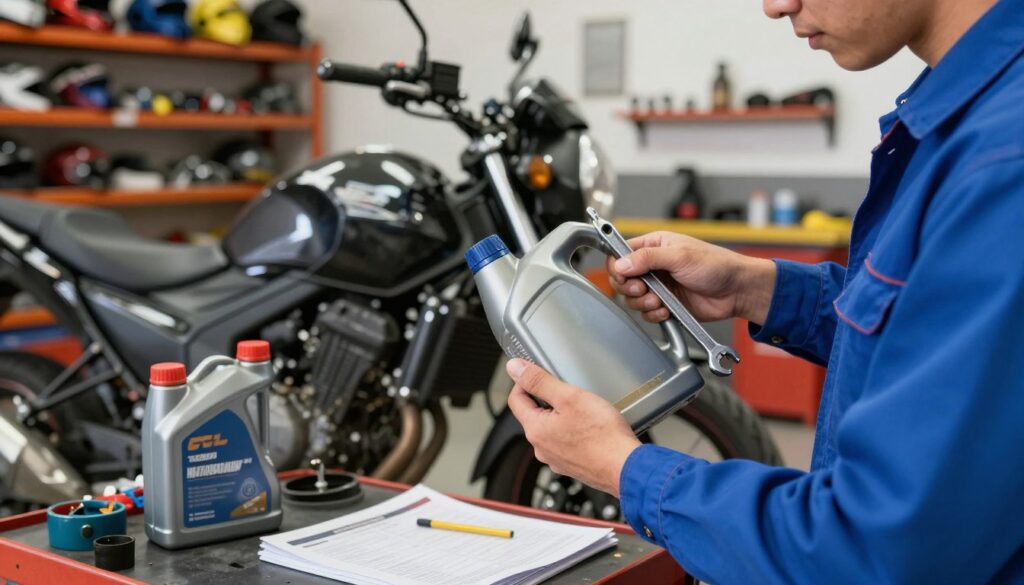
Regular oil changes, whether done DIY or professionally, contribute to the long-term health of your motorcycle. By maintaining your motorcycle regularly, you can prevent costly repairs down the line. Regular maintenance is key to extending the life of your vehicle and ensuring it runs smoothly.
In conclusion, understanding the cost considerations and deciding between DIY and professional service for your automatic motorcycle’s oil change can help you manage your maintenance costs effectively while ensuring your vehicle remains in good condition.
Maintaining your automatic motorcycle with a proper oil change schedule is crucial for its longevity and performance. Regular oil changes help protect the engine and CVT transmission system from wear and tear, ensuring a smoother ride and extending the life of your vehicle.
The importance of regular oil changes cannot be overstated, as it directly impacts the overall health of your motorcycle. By understanding the factors that affect oil change intervals and being aware of the signs that indicate the need for a change, you can keep your motorcycle running efficiently.
Whether you choose to perform DIY oil changes or opt for professional service, adhering to a proper maintenance schedule is key to motorcycle maintenance conclusion. This not only enhances the performance and lifespan of your motorcycle but also contributes to a safer and more enjoyable riding experience.
By prioritizing the importance of regular oil changes, you can enjoy a well-maintained motorcycle that provides years of reliable service.
