Address
304 North Cardinal St.
Dorchester Center, MA 02124
Work Hours
Monday to Friday: 7AM - 7PM
Weekend: 10AM - 5PM
Address
304 North Cardinal St.
Dorchester Center, MA 02124
Work Hours
Monday to Friday: 7AM - 7PM
Weekend: 10AM - 5PM
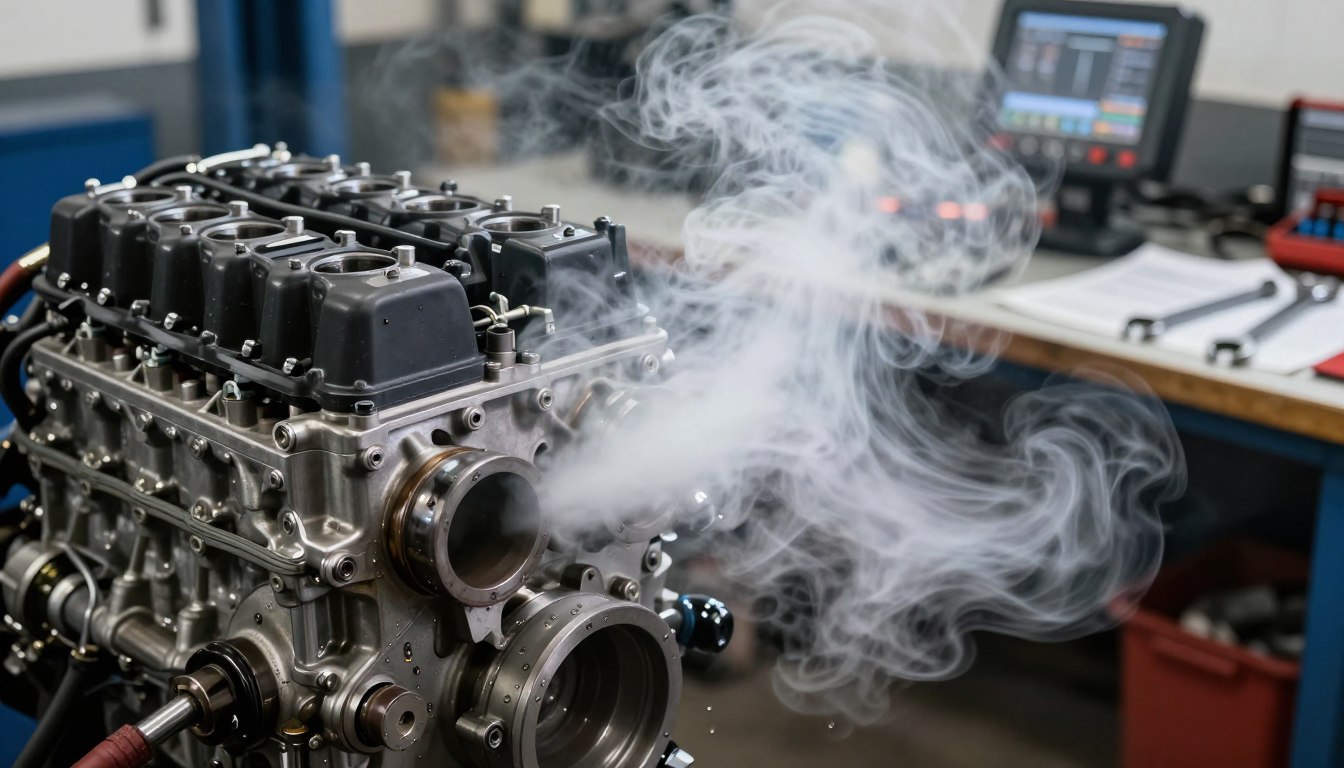
Seeing a thick cloud trailing behind your vehicle can be a startling experience for any driver. You might be cruising down the highway when a sudden puff of white smoke from engine components appears in the rearview mirror. This unexpected sight often causes immediate concern, yet understanding the situation is the first step toward a fix.
Identifying the root cause of this vapor is essential for protecting your vehicle’s longevity. A professional engine smoke diagnosis helps you distinguish between simple morning condensation and a serious internal coolant leak. Staying calm and observant allows you to gather the necessary details before visiting a local mechanic.
Consistent car maintenance serves as your primary defense against these frustrating mechanical complications. While some minor issues seem easy to ignore, visible smoke is a clear signal that your car requires prompt attention to avoid expensive repairs. Let us explore what your vehicle is communicating and how to resolve the issue effectively.
The appearance of white smoke from your vehicle’s engine is often a signal that something is amiss, warranting further investigation. Engine smoke can be an important diagnostic tool, helping you identify potential issues before they become major problems.
Engine smoke signals are a crucial indicator of your vehicle’s health. The color and consistency of the smoke can provide valuable insights into what’s happening inside your engine. Different colors can indicate different problems, making it essential to understand what you’re seeing.
One of the first things to determine when you see white smoke is whether it’s actually steam. Steam is a common and usually harmless occurrence, especially on cold mornings. However, if the smoke persists or is accompanied by other symptoms, it could indicate a more serious issue.
The color of the smoke is a critical diagnostic clue. White smoke, in particular, can indicate coolant leakage into the combustion chamber. Understanding the significance of smoke color can help you address potential problems early on.
| Smoke Color | Possible Cause |
|---|---|
| White | Coolant leakage, condensation |
| Black | Excessive fuel consumption, clogged air filter |
| Blue/Gray | Oil burning, worn engine parts |
White smoke emanating from your engine can be alarming, but with a quick diagnostic checklist, you can pinpoint the issue. This systematic approach helps you identify the root cause efficiently.
Begin with a visual inspection of your engine and its surroundings. Look for any signs of leaks or damage. Check the condition of the engine oil and coolant. A visual inspection can reveal potential issues that might be causing the white smoke.
Ensure that your engine’s fluid levels are at the recommended levels. Low coolant levels or contaminated engine oil can lead to white smoke. Use the dipstick to check the oil level and look for any signs of coolant leakage.
Observe the smoke pattern and timing. Does the smoke appear when the engine is cold or hot? Is it constant or intermittent? Noting these details can help narrow down the possible causes.
There are several simple tests you can conduct at home. For instance, you can check the coolant for engine oil contamination or vice versa. You can also use a compression test kit to check for any internal engine issues.
| Diagnostic Step | Purpose |
|---|---|
| Visual Inspection | Identify leaks or damage |
| Fluid Levels Check | Ensure proper fluid levels |
| Smoke Observation | Determine smoke pattern and timing |
| Simple Tests | Check for contamination or internal issues |
Understanding the reasons behind white smoke from your motor is essential for timely and effective repairs. White smoke from your engine can indicate a range of issues, from minor problems that are easily fixable to more serious conditions that require immediate attention.
Several factors can contribute to white smoke emanating from your engine. These include:
Coolant leakage is a common issue that can lead to white smoke. This occurs when coolant enters the combustion chamber and is burned along with the fuel, producing white smoke.
The severity of the issue can often be gauged by the amount and persistence of the white smoke. For instance, a small amount of white smoke upon starting the engine in cold weather might be normal, but persistent white smoke under various conditions could indicate a more serious problem.
| Cause | Severity Level | Symptoms |
|---|---|---|
| Coolant Leakage | High | Persistent white smoke, overheating engine |
| Blown Head Gasket | High | White smoke, coolant loss, engine overheating |
| Cracked Cylinder Head/Block | Critical | White smoke, significant coolant loss, engine misfires |
To effectively diagnose the issue, it’s crucial to match the observed symptoms with potential causes. For example, if the white smoke is accompanied by a sweet, syrupy smell, it could indicate coolant leakage into the combustion chamber.
As a seasoned mechanic once said,
“The key to diagnosing engine issues lies in understanding the subtle clues provided by the engine’s behavior and appearance.”
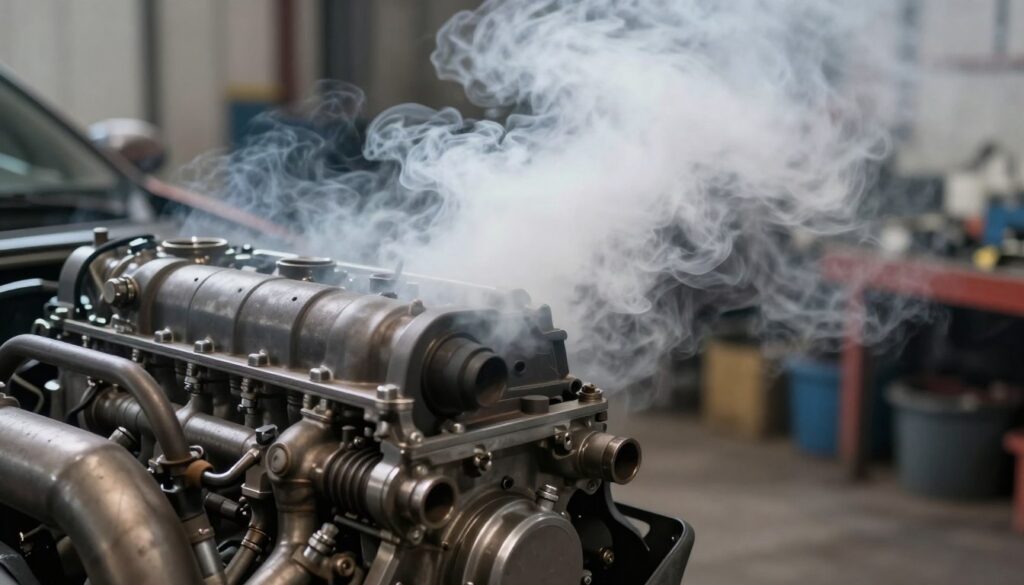
By understanding the causes, recognizing the severity levels, and matching symptoms to potential causes, you can take the first steps towards resolving the issue of white smoke from your motor.
The appearance of white smoke from your engine during cold starts can be alarming, but it’s not always a cause for concern. Cold start smoke is a common phenomenon, especially during the colder months.
When your engine is cold, the air is typically more humid, and the engine’s components are at a lower temperature. As a result, the fuel combustion process produces more condensation, leading to a visible white smoke or steam.
Morning smoke is considered normal if it dissipates quickly after the engine warms up. This is usually just condensation being expelled from the exhaust system. If the smoke clears up within a few minutes, it’s likely not a cause for concern.
To determine if the smoke is normal or indicative of a problem, observe its duration and characteristics. If the white smoke persists even after the engine has warmed up, or if it’s accompanied by other symptoms like a sweet smell or decreased engine performance, it may indicate a more serious issue.
A blown head gasket is a serious engine issue that can cause significant damage if not addressed promptly. It is a critical component that seals the engine’s cylinders, ensuring that the combustion process is contained and efficient.
Head gaskets can fail due to various reasons, including overheating, engine misfires, or improper installation. Overheating is a common cause, as it can cause the head gasket to degrade or fail. “A blown head gasket is often a result of neglecting regular maintenance, such as checking coolant levels,” according to engine repair experts.
Identifying a blown head gasket early is crucial to prevent further engine damage. Common signs include white smoke emanating from the exhaust, coolant leaks, and a significant drop in engine performance. Keep an eye out for these symptoms to catch the issue before it escalates.
To diagnose a blown head gasket, several tests can be performed, including a compression test, a leak-down test, or a chemical test to detect combustion gases in the cooling system. These tests help determine the extent of the damage.
Repairing a blown head gasket involves replacing the gasket and potentially resurfacing the engine head or block. The cost can vary widely depending on the extent of the damage and the type of vehicle. It’s essential to get a professional assessment to understand the repair options and associated costs.
In conclusion, a blown head gasket is a significant issue that requires prompt attention. By understanding the causes, signs, and repair options, car owners can take proactive steps to address the problem and prevent further engine damage.
Cracks in the cylinder head or engine block are significant engine faults that require immediate attention. These cracks can lead to various problems, including overheating, coolant leaks, and decreased engine performance.
Cracks in engine components can result from several factors. Overheating is a common cause, as it can cause the metal to expand and contract, leading to cracks over time. Freezing temperatures can also cause cracks if the coolant is not properly winterized. Additionally, physical damage from accidents or improper repairs can lead to cracks.
Identifying a cracked cylinder head or engine block can be challenging, but there are several symptoms to look out for. These include:
Diagnosing cracks in engine components typically requires professional expertise. Mechanics may use various methods, including:
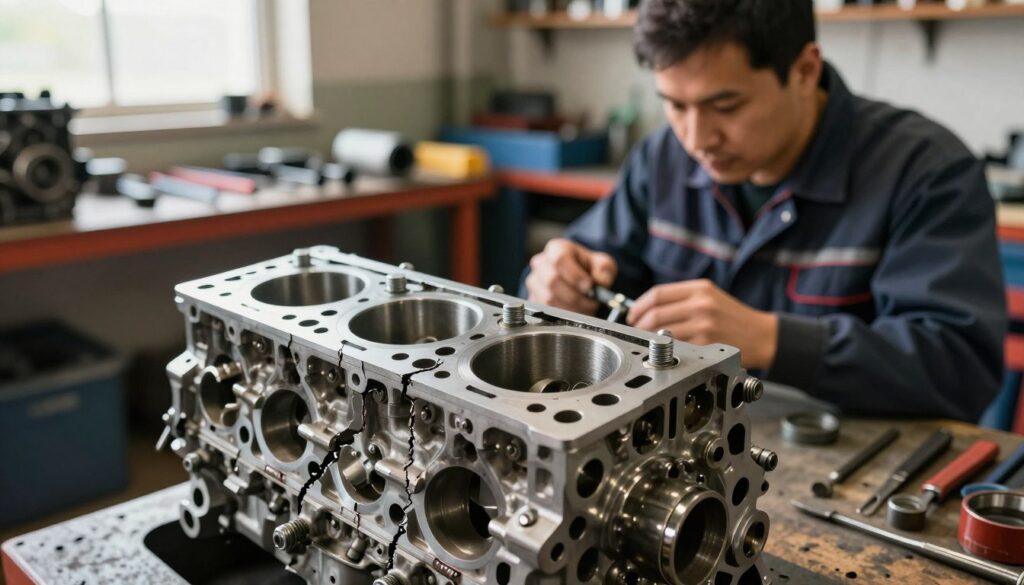
Once a crack is diagnosed, the next step is to decide between repair and replacement. Minor cracks might be repairable using techniques like welding or epoxy sealing. However, severe cracks may necessitate replacing the cylinder head or engine block entirely. The decision depends on the extent of the damage and the overall condition of the engine.
It’s crucial to consult with a professional mechanic to determine the best course of action for your specific situation.
When coolant leaks into the combustion chamber, it can cause significant engine damage if not addressed promptly. This issue is often accompanied by white smoke emanating from the exhaust pipe.
Coolant can enter the combustion chamber due to several reasons, including a blown head gasket, cracks in the cylinder head or engine block, or other internal engine damage. These issues compromise the seals that keep coolant and combustion gases separate.
One of the primary indicators of coolant leaking into the combustion chamber is the presence of white smoke from the exhaust. You can perform a simple test by checking the exhaust pipe for any unusual residue or smell. Additionally, look out for a sweet, syrupy odor from the exhaust, which is a sign of coolant being burned.
A coolant leak into the engine can also result in milky oil on the dipstick or oil cap. This occurs when coolant mixes with the engine oil. Other signs include an overheating engine and a low coolant level without any visible external leaks.
If you suspect a coolant leak into the combustion chamber, take immediate action:
Addressing the issue promptly can prevent further damage and costly repairs.
Addressing white smoke from your engine requires identifying the root cause and applying the appropriate fix. Once you’ve diagnosed the issue, you can proceed with the necessary repairs to get your engine running smoothly again.
For minor issues causing white smoke, such as condensation or a faulty thermostat, DIY fixes can be a cost-effective solution. Simple checks like ensuring your coolant level is adequate and inspecting the thermostat can often resolve the problem. If the issue is with the cooling system, bleeding the system to remove airlocks can also be a straightforward fix.
A blown head gasket is a more serious issue that requires professional attention. However, understanding the replacement process can help you prepare. The procedure involves removing the cylinder head, inspecting for damage, and replacing the gasket. It’s crucial to identify and fix any underlying issues that led to the gasket failure to prevent future problems.
In cases where the white smoke is due to a cracked cylinder head or engine block, major repairs are necessary. These repairs can be complex and costly, involving machining or replacing the damaged components. It’s essential to get a professional assessment to determine the best course of action.
Understanding the potential costs involved can help you plan for the repairs. Here’s a rough breakdown:
| Repair | Cost Range |
|---|---|
| DIY Fixes | $0 – $500 |
| Gasket Replacement | $1,000 – $3,000 |
| Major Engine Repairs | $3,000 – $10,000+ |
By understanding the causes of white smoke and the associated repair costs, you can make informed decisions about how to proceed with fixing your engine.
Preventive maintenance is key to avoiding the frustration and cost associated with white smoke from your engine. By staying on top of regular checks and maintenance, you can identify potential issues before they become major problems.
Following the recommended maintenance schedule for your vehicle is crucial. This includes regular fluid checks and changes, which help keep your engine clean and well-lubricated. Regular checks can help detect issues like coolant leaks or low levels, which can cause white smoke.
Using quality parts and coolant is essential for maintaining your engine’s health. Inferior products can lead to premature wear and potentially cause issues like white smoke. Always opt for reputable brands and follow the manufacturer’s recommendations.
Paying attention to early warning signs can prevent minor issues from becoming major repairs. Keep an eye out for signs like unusual smells, temperature fluctuations, or changes in your vehicle’s performance. Addressing these issues promptly can save you time and money in the long run.
By incorporating preventive maintenance into your vehicle care routine, you can minimize the risk of white smoke and other engine problems, ensuring your car runs smoothly and efficiently.
