
Choosing a new bike involves more than just picking a favorite color or engine size. It is really about how you want to interact with the machine while traveling. Understanding the CVT vs manual motorcycle transmission debate is crucial because the way you shift gears will define your entire experience on two wheels.
This transmission comparison explores the difference between CVT and manual motorcycle setups, breaking down mechanics, performance, and maintenance costs to help you choose wisely.
Key Takeaways
- Automatic CVT systems offer a seamless, gearless riding experience for urban commuters.
- Standard manual gearboxes provide riders with maximum engine control and power.
- Fuel efficiency and acceleration vary significantly between these two designs.
- Maintenance requirements change based on internal parts, belts, and clutches.
- City riders often favor the ease of “twist-and-go” bikes in heavy traffic.
- Traditional shifting remains a favorite for performance enthusiasts and long tours.
Understanding Motorcycle Transmission Systems
Understanding the basics of motorcycle transmission systems is essential for any rider looking to get the most out of their vehicle. Transmission systems are designed to transmit power from the engine to the wheels. The type of transmission used can significantly affect the riding experience, performance, and overall efficiency.
What Is a Transmission and Why Does It Matter?
A transmission is a critical component of a motorcycle’s powertrain, responsible for adjusting the gear ratio to optimize power and speed according to riding conditions. It matters because it directly impacts performance, fuel efficiency, and the rider’s ability to control the vehicle. The system ensures the engine operates within its optimal power range, enhancing acceleration, top speed, and responsiveness.
Two Main Types: Automatic CVT and Manual
Motorcycle transmissions are primarily categorized into two types: Automatic Continuously Variable Transmission (CVT) and Manual Transmission.
CVT transmissions are known for their simplicity and ease of use, making them ideal for casual riders and urban commuting. On the other hand, manual transmissions offer riders more control, allowing for a more engaging and dynamic riding experience.
What Is a CVT Transmission on Motorcycles?
Continuously Variable Transmission (CVT) technology has revolutionized the way scooters and automatic motorcycles operate, providing a smooth and efficient ride without the need for manual gear shifting.
The Basics of CVT Technology
CVT technology uses a belt and pulley system to provide an infinite number of gear ratios, allowing the engine to always operate within its optimal power range. This results in improved fuel efficiency and reduced emissions.
The system consists of two variable-diameter pulleys connected by a V-belt. As engine speed changes, the pulleys adjust their diameter to change the gear ratio. Because they do not require the rider to manually shift gears, CVTs are considered automatic.
Common Motorcycles That Use CVT Systems
Several popular motorcycles use CVT systems, offering riders the benefits of automatic transmission. Some of these models include:
- Honda PCX 160: A popular scooter providing a smooth and efficient ride, ideal for urban environments. [Internal Link: Read our full Honda PCX 160 Review]
- Yamaha NMAX 155: Utilizes CVT technology offering a balance of performance and fuel efficiency. [External Link: Yamaha NMAX 155 Official Specs]
- Vespa Primavera 150: A stylish scooter making it easy to ride in heavy traffic conditions.
- BMW C 400 GT: A high-performance scooter blending power and efficiency with smooth acceleration.
What Is a Manual Transmission on Motorcycles?
Manual transmissions provide a unique riding experience that combines skill and mechanical connection. Unlike automatics, manuals require riders to actively engage in the gear-shifting process.
How Manual Transmissions Work
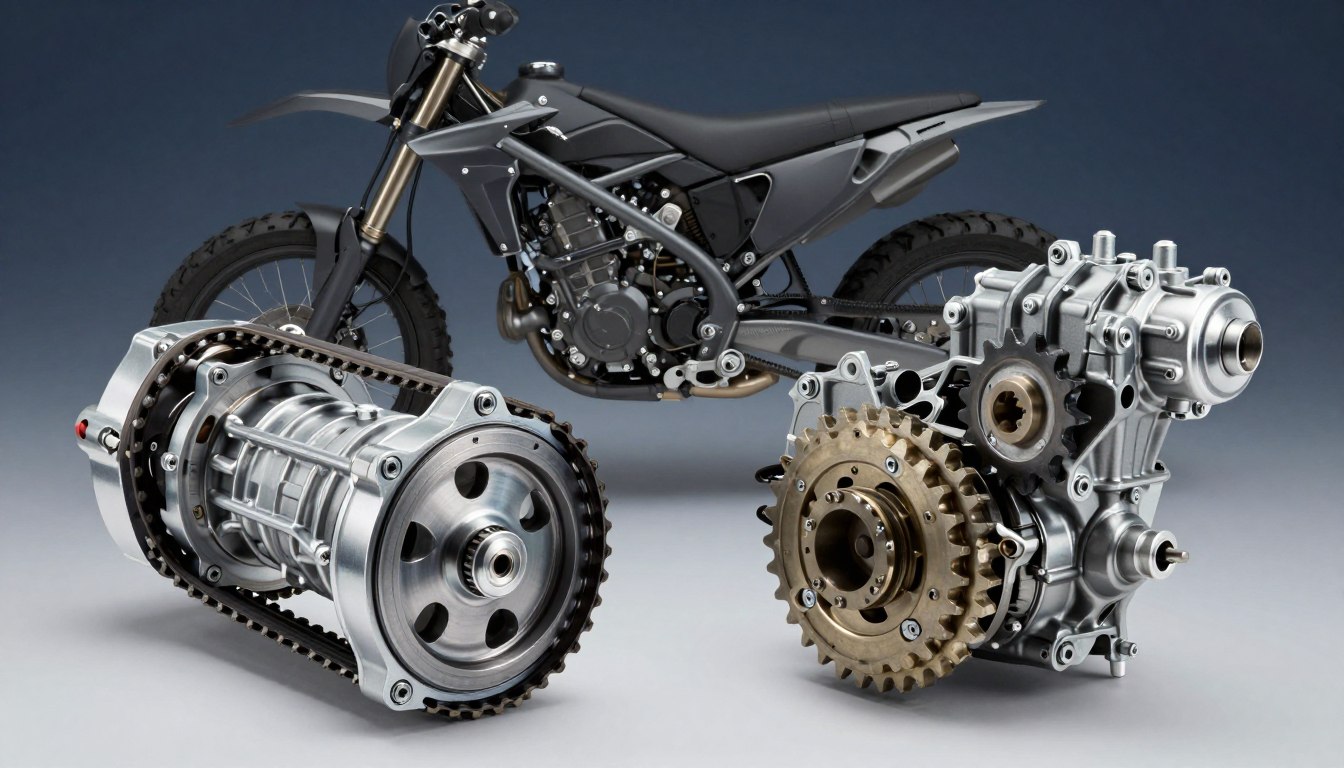
A manual transmission operates through a combination of the clutch lever, gear shifter, and gearbox. The clutch lever (located on the left handlebar) disconnects the engine from the transmission, allowing for gear changes. The foot-operated gear shifter selects the desired gear.
Most manual motorcycles use a sequential shifting pattern, meaning the rider must shift through gears in sequence (1-N-2-3-4-5). This simplifies the shifting process and reduces the likelihood of missing a gear.
Popular Manual Transmission Motorcycles
- Honda CB500F: A versatile, beginner-friendly motorcycle with smooth power delivery.
- Yamaha MT-07: Known for agile handling and precise shifting. [Internal Link: Yamaha MT-07 Ownership Cost Guide]
- Kawasaki Ninja 400: A sporty motorcycle offering an engaging manual experience.
- Harley-Davidson Street 750: A cruiser providing a unique, heritage-rich manual ride.
[Image: motorcycle-manual-gearbox.jpg | Alt: Ilustrasi sequential gearbox motor manual dengan clutch lever dan gear shifter]
How CVT Transmissions Operate
At the heart of CVT transmissions lies a sophisticated pulley and belt system that enables seamless transitions between gear ratios.
The Pulley and Belt System Explained
It consists of two variable diameter pulleys connected by a V-belt. The pulleys change their diameter in response to engine speed and load through a system of springs and weights. As the pulleys change, the V-belt adjusts its position, allowing for smooth transitions.
The Centrifugal Clutch Mechanism
The centrifugal clutch engages and disengages the engine based on speed. When idling, the clutch is disengaged. As engine speed increases, the clutch engages, connecting the engine to the transmission and allowing power to reach the wheels.
How Manual Transmissions Operate
Manual transmissions offer control and precision through several key components working together seamlessly.
The Clutch Lever and Gear Shifting Process
Upshifting involves rolling off the throttle, pulling the clutch lever, shifting into the next gear, and releasing the clutch while rolling back on the throttle. Downshifting requires careful management of engine braking and clutch control to match gear speed.
Key Differences Between CVT and Manual Motorcycle Transmissions
Understanding the difference between CVT and manual motorcycle setups is a critical consideration for riders.
- Operational Differences: CVT operates automatically without rider input. Manual requires clutch operation and manual gear shifting.
- Mechanical Complexity: CVT systems generally have fewer moving parts than manual gearboxes, leading to different maintenance profiles.
- Rider Involvement: Manual offers a highly engaging experience with direct control over power delivery. CVT provides a straightforward, less engaging ride.
- Weight and Size: CVT systems are often more compact and lighter, though manual gearboxes offer a traditional feel many enthusiasts prefer.
Performance Comparison: CVT vs Manual
The type of transmission significantly affects overall performance, including acceleration, top speed, and fuel efficiency.
Acceleration and Top Speed
Manual transmissions generally have an edge here. They allow riders to optimize acceleration by keeping RPMs high. According to manufacturer track data, sport motorcycles with manual transmissions can accelerate from 0 to 60 mph in under 3 seconds. In contrast, CVTs provide smooth, seamless acceleration but typically can’t match the aggressive “punch” of a manual gearbox.
Fuel Efficiency Considerations
CVT transmissions are generally more fuel-efficient in city riding due to their ability to maintain the engine at its most efficient RPM. On the highway, manual transmissions can offer comparable or better economy when ridden efficiently.
According to a technical analysis by Cycle World Magazine: “The CVT’s ability to keep the engine running within its optimal power band makes it particularly efficient for urban commuting.”
Hill Climbing and Power Management
Manual transmissions excel here. Riders can manually adjust gears to match terrain, ensuring necessary power. CVTs can sometimes feel “rubber-bandy” on steep inclines as the transmission continuously hunts for the optimal ratio.
Maintenance Requirements and Costs
The maintenance requirements for CVT and manual transmissions differ significantly, impacting ownership costs.
CVT Maintenance Needs
- Belt Replacement: The V-belt needs replacement every 10,000 to 15,000 miles. Neglecting this can cause severe transmission damage.
- Roller and Pulley Servicing: Rollers should be inspected for flat spots and wear periodically.
- Air Filter and Oil: Regular engine oil changes are vital as the CVT relies on engine cooling.
Manual Transmission Maintenance
- Clutch Replacement: The clutch is a wear item requiring replacement depending on riding style.
- Transmission Oil Changes: Essential for keeping the gearbox lubricated.
- Chain and Sprockets: Manual bikes require regular chain lubrication and sprocket inspection. [Internal Link: How to maintain your motorcycle chain]
Learning Curve and Ease of Use
CVT systems are highly praised for their beginner-friendliness. They eliminate stalling, allowing new riders to focus on balance and traffic awareness. Mastering a manual transmission requires developing clutch control and coordination but builds fundamental riding skills.
Cost Comparison: Purchase and Ownership
Motorcycles with CVT transmissions (scooters) tend to be more affordable upfront ($2,000 – $5,000). Manual motorcycles often start higher ($3,000 – $6,000+) but tend to retain their resale value better among enthusiast buyers.
According to Kelley Blue Book motorcycle valuation data: “Manual transmission motorcycles tend to have a stronger resale market, especially for high-performance models.” Insurance premiums for manual bikes can also be slightly higher due to perceived risk.
Which Transmission Type Is Right for You?
- Choose CVT if: You are an urban commuter, a new rider, or someone who prioritizes convenience in stop-and-go traffic.
- Choose Manual if: You are an enthusiast rider, do long-distance touring, or prioritize performance, acceleration, and mechanical engagement.
Conclusion
Choosing between a CVT and a manual transmission motorcycle depends on riding style, personal preference, and intended use. CVT motorcycles offer ease of use and convenience, particularly in urban scenarios. Manual transmissions provide a more engaging experience and better control, appealing to enthusiasts. By considering performance requirements, maintenance costs, and riding conditions, you can make an informed decision that best suits your lifestyle.
Frequently Asked Questions (FAQ)
What is the main difference between CVT and manual in daily riding? A CVT (found on scooters like the Honda PCX 160) is completely automatic, allowing you to “twist and go.” A manual transmission (like the Yamaha MT-07) requires operating a clutch lever and foot shifter through a sequential gearbox.
Which transmission type is better for beginners? Most new riders find CVT systems easier because they eliminate the risk of stalling. However, starting on a manual bike like the Kawasaki Ninja 400 builds fundamental clutch and engine-braking skills.
Is there a significant difference in maintenance costs? Yes. CVTs require periodic V-belt and roller replacements. Manual bikes require chain maintenance and eventual clutch plate replacement. CVT maintenance is more frequent, while manual repairs can be more labor-intensive.
Does a manual motorcycle offer better fuel efficiency? Manuals are often more efficient on highways by allowing lower RPMs. However, modern CVTs are highly optimized for stop-and-go traffic and often rival manuals in urban environments